
A squeaky garage door is more than just an annoyance—it's usually a sign that something needs attention. The good news is that most squeaks and grinds can be fixed with a bit of regular cleaning and maintenance. Here's how to keep your garage door and opener running quietly and smoothly.
Why Garage Doors Start Squeaking
Over time, dust, dirt and old lubricant build up on moving parts, causing friction. Hinges loosen, rollers wear down, and springs stretch with everyday use. Left unchecked, these small issues can turn into bigger, more expensive repairs. Regular maintenance not only stops the noise but also extends the life of your door and opener.
Tools You'll Need
- Soft cloth or microfibre towel
- Mild detergent and water
- Silicone-based garage door lubricant (avoid WD-40 for long-term lubrication)
- Soft-bristle brush
- Adjustable wrench or screwdriver
- Vacuum cleaner with a brush attachment
Step-by-Step Cleaning Guide
1. Clean the Tracks
Dirt and debris in the tracks can cause the door to jam or scrape. Use a soft cloth dampened with mild detergent to wipe down both tracks, removing built-up grime. Avoid using harsh chemicals, as these can damage the metal finish.
2. Wipe Down Rollers and Hinges
Rollers and hinges collect the most dust and old grease. Wipe them clean with a cloth, then use a soft brush to get into tighter spots. If rollers are cracked, chipped or worn, it may be time to replace them rather than just clean them.
3. Dust the Opener Unit
The garage door opener motor and rail also attract dust over time. Switch off the power before cleaning, then use a dry cloth or vacuum brush attachment to remove buildup from the motor housing and chain or belt rail.
Lubrication: The Key to a Silent Door
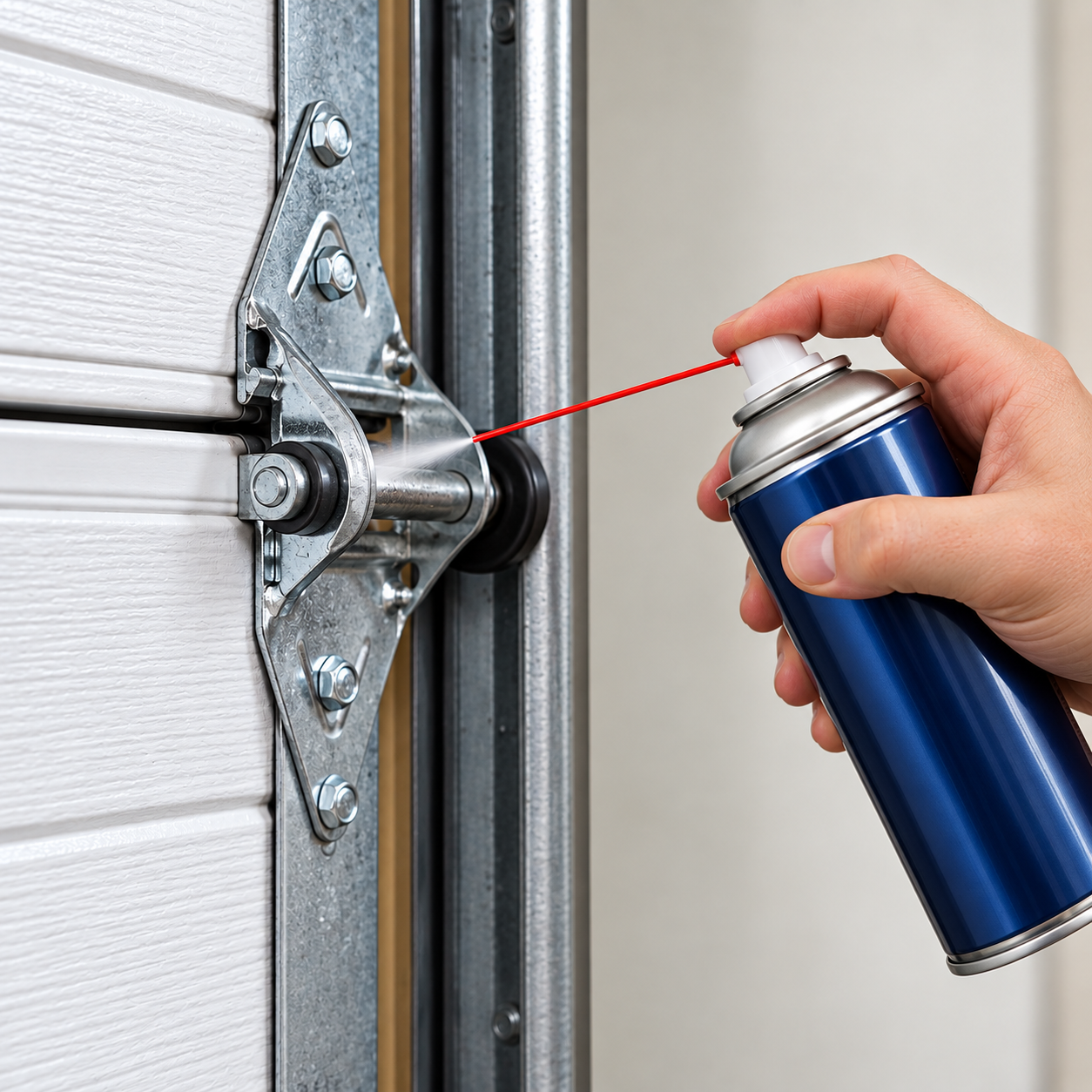
Squeaking is often simply a lubrication issue. Apply a silicone-based lubricant to the following parts every three to six months:
- Hinges and pivot points
- Rollers (unless they're nylon, which shouldn't be lubricated)
- Springs
- The opener's chain or screw rail
- Lock and latch mechanisms
Wipe away any excess lubricant to prevent it from attracting more dust and dirt.
Tightening Loose Hardware
Vibration from daily use can loosen nuts, bolts and screws on brackets, hinges and tracks. Grab a wrench and check all visible hardware, tightening anything that feels loose. This simple step can eliminate rattling and squeaking caused by shifting components.
Checking the Springs and Cables
Worn or unbalanced springs are a common cause of strain-related noise. Test your door's balance by disconnecting the opener and manually lifting the door halfway—it should stay in place. If it drops or rises on its own, the springs may need adjusting or replacing. Springs are under high tension, so this task is best left to a professional garage door technician.
Maintaining the Garage Door Opener
Beyond cleaning, a few simple checks keep your opener running well:
- Test the auto-reverse safety feature by placing an object in the door's path
- Check remote and wall control batteries regularly
- Inspect the safety sensors for dust or misalignment
- Listen for unusual grinding sounds from the motor, which could indicate a mechanical issue
When to Call a Professional
While regular cleaning and lubrication solve most squeaky garage door problems, some issues require expert attention—particularly anything involving springs, cables or the opener's internal mechanics. If your door remains noisy despite maintenance, or you notice sagging, jerky movement or unusual sounds, it's time to call in a professional.
Keep Your Garage Door Running Smoothly
Routine maintenance is the simplest way to avoid costly repairs and keep your garage door quiet and reliable. A little cleaning and lubrication every few months goes a long way. If you're in Victoria and need a hand with garage door servicing, repairs or a full safety check, the team at Victoria Garage Door is here to help keep your door—and your home—running smoothly.