
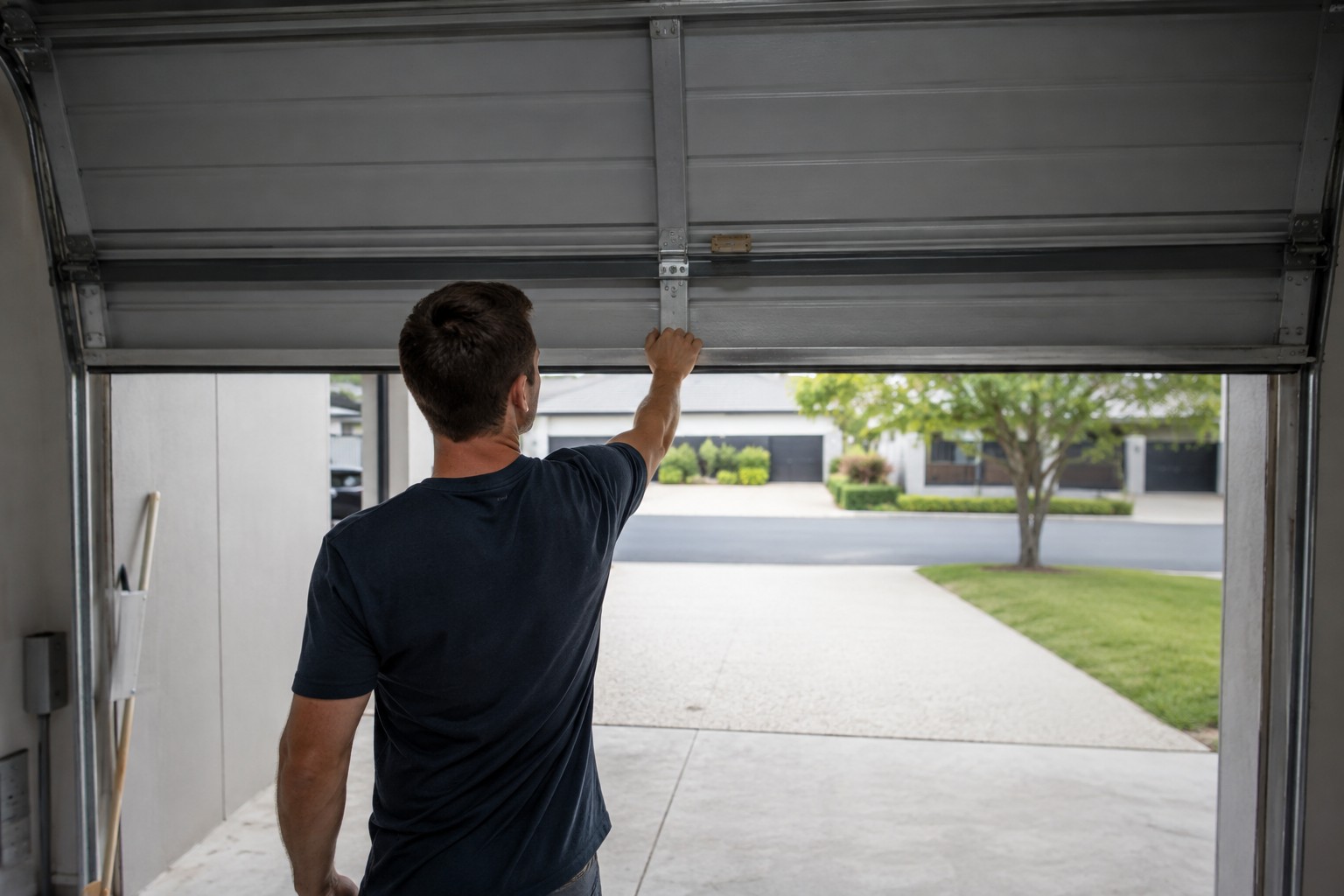
Whether it's a sudden power outage, a broken opener, or you're simply moving your car before an electrician arrives, knowing how to manually open a garage door is a handy skill every homeowner should have. Most modern garage doors come fitted with a manual release mechanism designed exactly for these situations. Here's how to use it safely.
Why You Might Need to Open Your Garage Door Manually
There are several common reasons you might need to bypass your automatic opener:
- A power outage has cut electricity to your garage door opener
- The opener motor has failed or is being serviced
- You need to move your car out in an emergency
- The remote or wall control isn't responding
Fortunately, Australian building standards require most residential garage doors to include a manual release feature for exactly these scenarios.
Before You Start: Safety First
Manually operating a garage door involves working with a heavy, spring-loaded panel, so a few precautions go a long way.
Key Safety Tips
- Always disconnect the opener before lifting the door by hand
- Keep hands, fingers and clothing clear of moving parts and springs
- Never place your body under a partially open door
- If the door feels unusually heavy or won't stay open, stop and call a professional
- Keep children and pets away from the area while you work
Step-by-Step: How to Manually Open a Garage Door
1. Locate the Emergency Release Cord
Most sectional garage doors have a red emergency release cord hanging from the trolley on the ceiling track, usually near the top of the door. This cord is designed to disconnect the door from the automatic opener.
2. Pull the Release Cord Downward
With the door fully closed, firmly pull the cord straight down. You should hear or feel a click as the trolley disengages from the opener carriage. This means the door is now free to be operated by hand.
3. Lift the Door Slowly and Evenly
Using both hands, grip the bottom section of the door and lift slowly and steadily. A properly balanced door should rise smoothly with minimal effort, thanks to its counterbalance springs. If it feels heavy, jerky, or uneven, stop immediately, this usually signals a spring or balance issue that needs professional attention.
4. Prop the Door Open If Needed
If you need the door to stay open, use a sturdy support such as a length of timber or a locking clamp on the track to prevent it from sliding back down unexpectedly.
5. Reconnect the Opener When Power Returns
Once power is restored or the opener is repaired, simply close the door manually, then pull the release cord again (or press the button on the trolley) to reconnect it to the automatic opener. Test it with the remote to confirm everything is working correctly.
What If There's No Release Cord?
Older or custom garage doors, particularly tilt doors, may not have a standard pull cord. In these cases, check for a manual lock or lever near the top corner of the door frame. If you're unsure how your specific door disengages, it's best to consult the manufacturer's manual or contact a local technician rather than forcing any mechanism.
When to Call a Professional
While manually opening a garage door is straightforward for most homeowners, certain signs indicate it's time to call in the experts:
- The door won't budge even after disengaging the opener
- You notice frayed cables, bent tracks, or damaged springs
- The door slams down or moves unevenly
- You're not confident identifying the release mechanism
Garage door springs are under significant tension and can cause serious injury if mishandled, so any repairs beyond basic manual operation should be left to trained technicians.
Stay Prepared with Victoria Garage Door
Knowing how to manually open a garage door gives you peace of mind during outages or unexpected opener issues. If your door feels difficult to lift, won't stay open, or you're dealing with a persistent fault, the team at Victoria Garage Door is ready to help. We offer prompt, reliable garage door repairs and servicing across Victoria, so you're never left stuck outside, or inside, your own garage.